








Yes. Sasol remains committed to a 30% reduction by 2030. The Emission Reduction Roadmap (ERR) was optimised and shared at Capital Markets Day 2025.
Climate FAQs
Climate FAQs
2030 target excludes Mozambique, Natref, and most strategic units (except ROAS)
In 2025, Sasol achieved an ~20% Group net reduction in Scope 1 and 2 emissions from our 2017 baseline. This was driven by a combination of factors:
- Lower production volumes, which reduced gross GHG emissions by 13.5% relative to 2017.
- Operational factors, including lower pure gas throughput, reduced steam production, and enhanced stability in the Secunda gas circuit.
- Methodology improvements, with a revision to the emissions calculation methodology at the Secunda gas production unit, leading to a restatement of FY24 emissions.
- Expanded Energy Reduction Roadmap (ERR) levers, now incorporating sustainable market mechanisms.
- Carbon offsets, where 3.8 Mt CO₂e credits were retired by SA Energy and Chemicals, contributing significantly to the 19% net reduction from the 2017 baseline.
- Energy efficiency gains, with Group energy efficiency improving by 2.9% year-on-year, particularly at Secunda Operations and Chemicals Eurasia.
The reduction was primarily driven by a decline in Scope 1 emissions, partially offset by an increase in Scope 2 emissions due to higher electricity imports as internal electricity generation decreased.
Sasol’s optimised ERR demonstrates our ability to lower our carbon footprint while continuing to deliver value. In 2025 we made key adjustments to the roadmap that allow us to maintain stable production while improving emissions performance. These include:
- Transitioning away from recycling fine coal and progressing more effective alternatives, significantly reducing capital costs
- Expanding our renewable energy ambition to 2 GW to replace a greater portion of coal-based electricity with cleaner, cost-effective power
- Continuing to use carbon offsets and renewable energy credits (RECs) to provide flexibility for emissions that are currently hard to abate
At the same time, we remain transparent about our intent to continue using coal well into the future, given its role in maintaining energy and operational stability during this complex transition. Our approach reflects a deliberate balance between decarbonisation, affordability, and the need to sustain our operations and broader socio-economic commitments as we progress toward a lower-carbon future.
CMD 2025 revealed an optimised ERR with revised decarbonisation levers and strategies, aligned to Sasol’s climate commitments and operational realities.
Executive incentives are linked to short- and long-term emissions performance. Transparent reporting is maintained.
Climate information is now integrated throughout the Integrated Report to reflect its strategic importance.
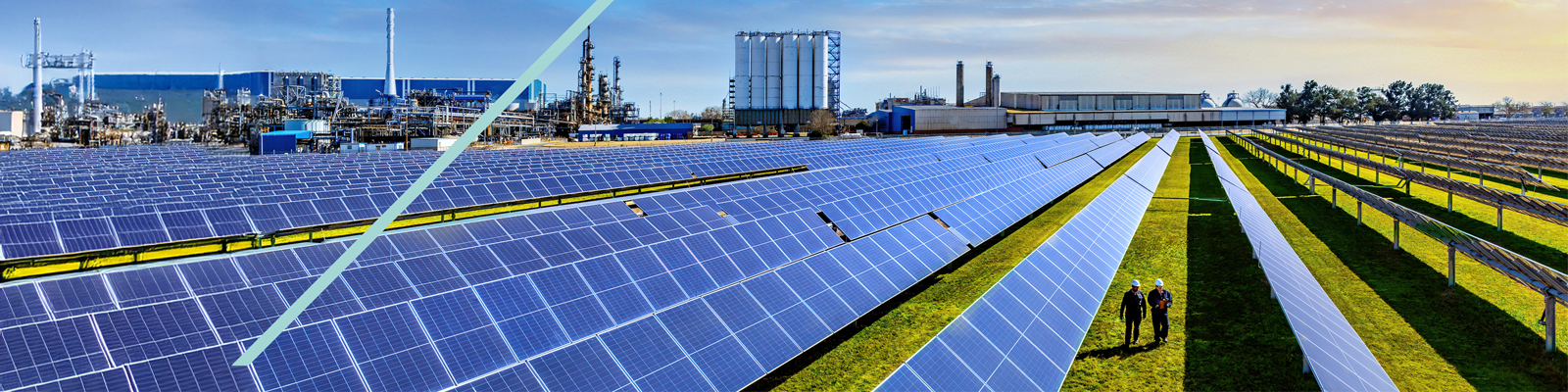
Renewable energy will contribute significantly to Sasol’s 30% GHG reduction target by 2030, with over 10 million tonnes of emissions expected to be avoided through current PPAs alone.
Southern Africa:
- Through our self-build and renewable energy procurement programme we have secured ~920MW in SA:
- ~688W was procured jointly with Air Liquide
- ~232 MW was procured by Sasol only (incl. a 3.3MW self build PV facility)
- 69 MW (Msenge Project) has achieved Commercial Operations.
- Damlaagte, 97.5MW online by mid-August 2025.
- The remaining projects are phased, and will come online in the next 2 – 3 years.
- Shifts in the regulatory environment now allow us to sell excess electricity. We have therefore lifted our 2030 target from the original 1,2 GW to more than 2 GW.
International Chemicals:
- A 93MW Virtual Power Purchase Agreement (VPPA) signed with Akuo in June 2025 will supply ~50% of Lake Charles’ power needs from mid-FY27
Via power purchase agreements (PPAs) and behind-the-meter projects, delivering cost savings and emissions reductions.
No. Sasol engages through public consultations and communicates business impacts to National Treasury.
Yes. Relevant records from 2021–2023 have been disclosed under PAIA; positions are available on Sasol’s website.
A 12-month cycle was too short to capture meaningful change. Reviews are now every 3 years unless material changes occur.
Sasol’s CDP score improved from a B to an A-, and it has enhanced its transparency across various platforms (CDP, MSCI, Sustainalytics). Regular benchmarking ensures alignment with global best practices. Sasol continues to report in line with the Task Force on Climate-related Financial Disclosures (TCFD). Its disclosures are reviewed and updated annually.
Through climate dialogues, investor roadshows, community forums, and international platforms like the UN Global Compact. The company also responds to ESG rating agencies and sustainability benchmarks.
Sasol publishes:
- CDP Climate Change Questionnaire
- Integrated Report
- GHG Inventory
Emissions Targets and Reporting
Yes. Sasol remains committed to a 30% reduction by 2030. The Emission Reduction Roadmap (ERR) was optimised and shared at Capital Markets Day 2025.
2030 target excludes Mozambique, Natref, and most strategic units (except ROAS)
In 2025, Sasol achieved an ~20% Group net reduction in Scope 1 and 2 emissions from our 2017 baseline. This was driven by a combination of factors:
- Lower production volumes, which reduced gross GHG emissions by 13.5% relative to 2017.
- Operational factors, including lower pure gas throughput, reduced steam production, and enhanced stability in the Secunda gas circuit.
- Methodology improvements, with a revision to the emissions calculation methodology at the Secunda gas production unit, leading to a restatement of FY24 emissions.
- Expanded Energy Reduction Roadmap (ERR) levers, now incorporating sustainable market mechanisms.
- Carbon offsets, where 3.8 Mt CO₂e credits were retired by SA Energy and Chemicals, contributing significantly to the 19% net reduction from the 2017 baseline.
- Energy efficiency gains, with Group energy efficiency improving by 2.9% year-on-year, particularly at Secunda Operations and Chemicals Eurasia.
The reduction was primarily driven by a decline in Scope 1 emissions, partially offset by an increase in Scope 2 emissions due to higher electricity imports as internal electricity generation decreased.
Climate Strategy and Implementation
Sasol’s ERR reflects responsible action to reduce GHG emissions while increasing long term value. Building on this foundation, Sasol announced its optimised ERR at the May 2025 Capital Markets Day. An integrated approach to innovation and profitability continues to drive this optimisation, supported by strategic roadmaps that ensure regulatory compliance while unlocking resilient and attractive growth pathways.
CMD 2025 revealed an optimised ERR with revised decarbonisation levers and strategies, aligned to Sasol’s climate commitments and operational realities.
Executive incentives are linked to short- and long-term emissions performance. Transparent reporting is maintained.
Climate Reporting
Climate information is now integrated throughout the Integrated Report to reflect its strategic importance.
Sasol maintained its CDP Climate Change score of A- in the 2025 disclosure cycle, reflecting continued performance and transparency in climate-related reporting. Regular benchmarking ensures alignment with global best practices. Sasol’s current sustainability report follows GRI, while its climate reporting is increasingly being aligned with ISSB/IFRS S2. Its disclosures are reviewed and updated annually.
Through climate dialogues, investor roadshows, community forums, and international platforms like the UN Global Compact. The company also responds to ESG rating agencies and sustainability benchmarks.
Sasol publishes:
- CDP Climate Change Questionnaire
- Integrated Report
- GHG Inventory
Renewable Energy (RE)
Sasol is among the largest purchasers of renewable energy in South Africa, supporting the country’s just energy transition. In FY26, Sasol secured a total of 1,37GW of RE of which 1,2GW is to support internal consumption, and 165 to service external customers including the strategic partnership with Discovery Green through Ampli energy. As a result, Sasol delivered on our initial 1,2GW commitment ahead of schedule and remains on track to achieve its revised 2GW ambition by 2030, as outlined in May 2025 at the Capital Markets Day (CMD).
To date, ~510MW is operational which is inclusive of the 97,5MW Damlaagte PV Facility which achieved commercial operation in August 2025, and the 330MW from the Impofu wind cluster which achieved commercial operation in June 2026. In February 2026, Sasol achieved financial close on an additional 300MW hybrid solar and 660MWh battery energy storage system, further diversifying the technology mix – this is currently under construction, with commercial operation planned for 2028.
These projects are key enablers of Sasol’s decarbonisation roadmap and its ambition to reduce CO₂ emissions from Secunda operations by 30% by 2030.
Via power purchase agreements (PPAs) and behind-the-meter projects, delivering cost savings and emissions reductions.
Carbon Tax and Lobbying
No. Sasol engages through public consultations and communicates business impacts to National Treasury.
Yes. Relevant records from 2021–2023 have been disclosed under PAIA; positions are available on Sasol’s website.
A 12-month cycle was too short to capture meaningful change. Reviews are now every 3 years unless material changes occur.